Latest Car Tech Frontiers

Ethan Sullivan
| 19-03-2026
 · Vehicle Team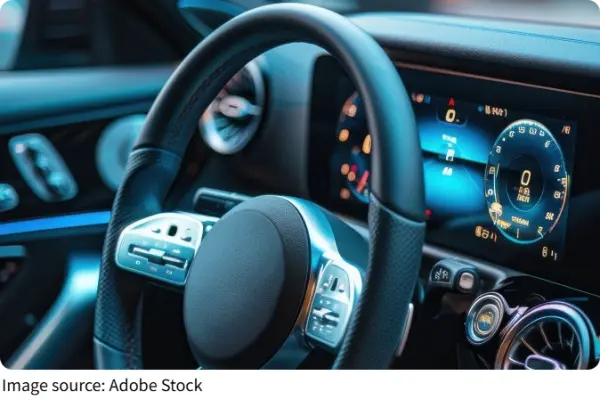
Cars are no longer just mechanical machines that transport people from A to B — they are evolving into highly connected, intelligent platforms that can communicate with the world around them.
The integration of connected vehicle technologies (IoV) and advanced driver assistance systems (ADAS) is today's automotive frontier, embedding sensors, communication modules and smart software into every aspect of driving.
Understanding these innovations helps explain how tomorrow's vehicles will be safer, more efficient and more intuitive than ever before.
Connected Vehicles and the Internet of Vehicles (IoV)
One of the most significant trends in automotive technology is the shift toward connected vehicles — cars that constantly communicate with their surroundings, infrastructure, other vehicles and cloud platforms. This ecosystem, often referred to as the Internet of Vehicles (IoV), transforms individual cars into nodes in a wider transport network.
In the IoV paradigm, the vehicle is not only aware of its immediate environment but can also access real time traffic data, infrastructure signals and even information from other vehicles to enhance safety and efficiency.
Connected vehicles rely on modern communication standards such as 5G and V2X (Vehicle to Everything) communication. This high speed, low latency exchange of data allows vehicles to coordinate adaptive routing, share hazard warnings, and support advanced driver assistance features.
Over time, connected systems are expected to reduce congestion, improve fuel efficiency, and provide real time navigation updates based on environmental conditions.
From a user perspective, IoV makes vehicles more responsive to dynamic conditions. A connected car can alert the driver to upcoming hazards, reroute to avoid traffic jams, or even integrate with smart city infrastructure to find optimal routes — all in real time. As connected technology continues to mature, the vehicle becomes an integral part of a larger, data driven mobility ecosystem.
Automatic and Intelligent Parking Systems
Another major automotive technology trend is automatic parking systems. These systems range from simple parking assist tools that steer the vehicle into a spot with driver supervision to fully automated valet parking functionality where the car navigates independently into a space.
The Intelligent Parking Assist System (IPAS), originally introduced by Toyota in the early 2000s, was among the first commercially deployed automations to handle reverse and parallel parking maneuvers with minimal driver input. Sensors, cameras, and onboard computers work together to determine available space, calculate steering trajectories, and execute the movement safely.
Modern systems integrate a wider range of sensors — including ultrasonic sensors, radar and cameras — to enhance accuracy. They can detect obstacles, adapt to tight spots and reduce parking time. Advanced versions are being paired with IoV capabilities so that vehicles can potentially search for and navigate to parking spaces autonomously using shared parking availability data.
Smart Dashboards and Augmented In Car Experiences
While not confined to a single source, the trend toward enhanced in vehicle infotainment and display systems is clear from industry data on connected cars and infotainment market growth. Today's dashboards are increasingly digital, multi screen, and often integrate augmented reality (AR) elements.
These AR dashboards can project navigation cues directly onto the windshield or digital display, overlaying directions and hazard warnings onto the driver's view without distracting from the road.
Combined with connected services, smart dashboards can provide personalized information, integrate smartphone applications, and even enable voice activated controls for navigation, climate, and media systems. This evolution turns the vehicle into a mobile digital hub, enhancing safety and convenience by reducing manual interaction and keeping the driver informed with contextual data.
The Role of IoT and Data in Future Vehicle Networks
The broader Internet of Things (IoT) concept plays a foundational role in connected vehicles. As vehicles become part of a real time network, data from sensors, telematics units, and infrastructure is constantly exchanged and analyzed to improve performance and safety. Telematic Control Units (TCUs) are now standard in many vehicles, serving as communication hubs that support services from emergency assistance to fleet management.
IoT integration also supports predictive maintenance, where vehicles can alert owners about upcoming service needs before they become critical, and over the air updates that keep software continuously optimized without a trip to the dealer. As mobile connectivity advanced from 4G to 5G, these services have become faster and more reliable — pushing connected car capabilities forward.
Reflection: From Machines to Intelligent Mobility Platforms
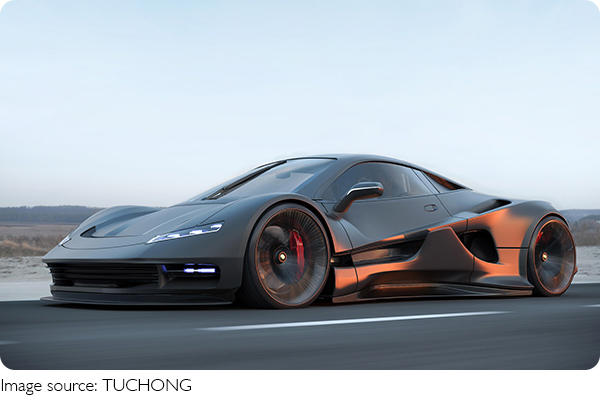
The ongoing shift in automotive technology reflects a broader transformation in how we think about mobility. Modern cars are fast evolving from isolated machines to intelligent, connected platforms capable of interacting with their environment, predicting driver needs, and handling complex tasks like parking independently.
This trend — fueled by IoV, advanced parking technologies and smart in car systems — not only enhances convenience and safety but also lays the groundwork for future innovations like autonomous driving. As vehicles become increasingly integrated into digital ecosystems, they will redefine our expectations of transportation, blurring the lines between automotive engineering, information technology and smart mobility.