The Art of a Latte

Pankaj Singh
| 05-03-2026
 · Food Team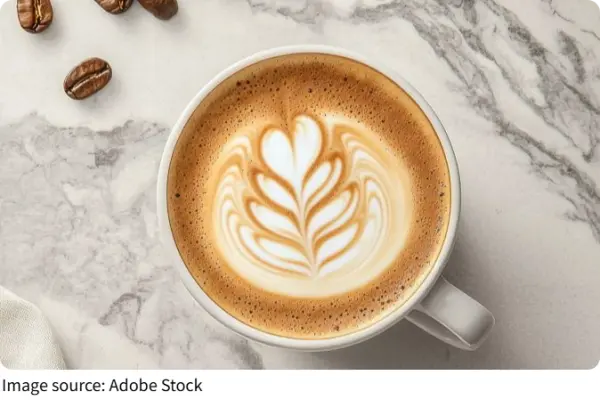
It's a quiet Saturday morning, and the smell of freshly brewed coffee fills the kitchen. You pour steamed milk into a rich espresso, and for a moment, the surface of the drink looks blank.
But with a careful tilt and swirl, a heart forms, delicate leaves appear, or a rosette blooms—suddenly, your simple cup of coffee transforms into a small masterpiece. Latte art isn't just decoration; it's an experience, a combination of technique, creativity, and the joy of crafting something both beautiful and delicious.
Materials You'll Need
1. Freshly Ground Coffee
Quality espresso is the foundation of a great latte. Use freshly ground beans and ensure the espresso shot is rich, creamy, and has a good layer of crema on top.
2. Milk
Whole milk is ideal for creating microfoam because it produces a velvety texture, but alternatives like oat or almond milk can work with the right steaming technique. Keep milk cold before steaming for the best foam.
3. Equipment
You'll need an espresso machine with a steam wand or a standalone milk frother, a stainless steel pitcher, a thermometer for milk temperature, and a cup suitable for latte art, preferably with a wide mouth.
Step-by-Step Process
1. Pulling the Espresso
Start by tamping the ground coffee evenly and pulling a 25–30 second shot. A good shot will have a golden-brown crema, which is essential for a smooth latte.
2. Steaming the Milk
Pour cold milk into a pitcher and submerge the steam wand just below the surface. Heat to about 60–65°C while creating microfoam by slightly tilting the pitcher and letting air incorporate gradually. The texture should be silky, without large bubbles.
3. Pouring and Creating Art
Hold the cup at a slight angle and pour the milk steadily into the espresso. Start from higher above, then bring the pitcher closer as the cup fills. Move your hand to draw hearts, leaves, or rosettes. A steady pour and controlled wrist movements are key.

Precautions and Tips
1. Milk Temperature
Avoid overheating milk, which can scald it and prevent proper frothing. Keep a thermometer handy to maintain the ideal 60–65°C range.
2. Practice Makes Perfect
Latte art is a skill that improves with repetition. Start with simple shapes like hearts before attempting complex rosettes or swans.
3. Cup and Pitcher Selection
A wide-mouthed cup provides more room to manipulate the milk flow, while a small spout on the pitcher allows for precision when drawing fine details.
4. Patience and Focus
Latte art requires attention to both texture and timing. Pour too quickly, and designs blur; pour too slowly, and the foam may settle before forming the desired pattern.
Creating latte art combines sensory pleasure with artistic expression. Each cup tells a story of patience, technique, and attention to detail. Beyond the visual appeal, the creamy texture and harmonious balance of espresso and milk elevate the simple act of drinking coffee into a ritual of comfort and creativity. Whether crafting a heart for a loved one or experimenting with intricate patterns on your own, latte art reminds us that even small, everyday actions can carry beauty and intention. The next time you pour a latte, consider it more than a drink—see it as a canvas, an invitation to enjoy both taste and artistry.